5 Common Mistakes Home Services Companies Make When Implementing Conversational AI (And How to Avoid Them)
5 Common Mistakes Home Services Companies Make When Implementing Conversational AI (And How to Avoid Them)

You finally pull the trigger on conversational AI for your HVAC, plumbing, roofing, or electrical business. You set it up, flip the switch, and... crickets. Or worse: generic responses that make customers feel like they're talking to a robot.
You're not alone. Most home services companies make the same five mistakes when rolling out AI for SMS, website chat, and social DMs. The good news? They're easy to avoid, and fixing them is what turns AI from an expensive experiment into booked jobs while you sleep.
Here are the five most common pitfalls I see, plus exactly how to sidestep each one.
Mistake 1: Using Generic, One-Size-Fits-All Prompts
The AI sounds like every other bot on the internet. Customers get robotic replies that don't know the difference between a hail-damage roof emergency and a routine summer AC tune-up.
Fix: Build a custom knowledge base and prompts tuned to your specific business. Include your service area, pricing guidelines, the seasonal and regional issues your customers actually call about, and the tone that matches your brand. Test it against real past customer inquiries before you go live.
Mistake 2: No Human Escalation Rules
The AI tries to handle everything, including complex quotes and frustrated customers, and ends up creating more problems than it solves.
Fix: Build clear escalation triggers from day one. If the job value is over a certain threshold, if the customer signals frustration, or if they ask for a human, the AI should immediately notify the right person on your team. Keep the AI as a force multiplier, not a replacement for judgment.
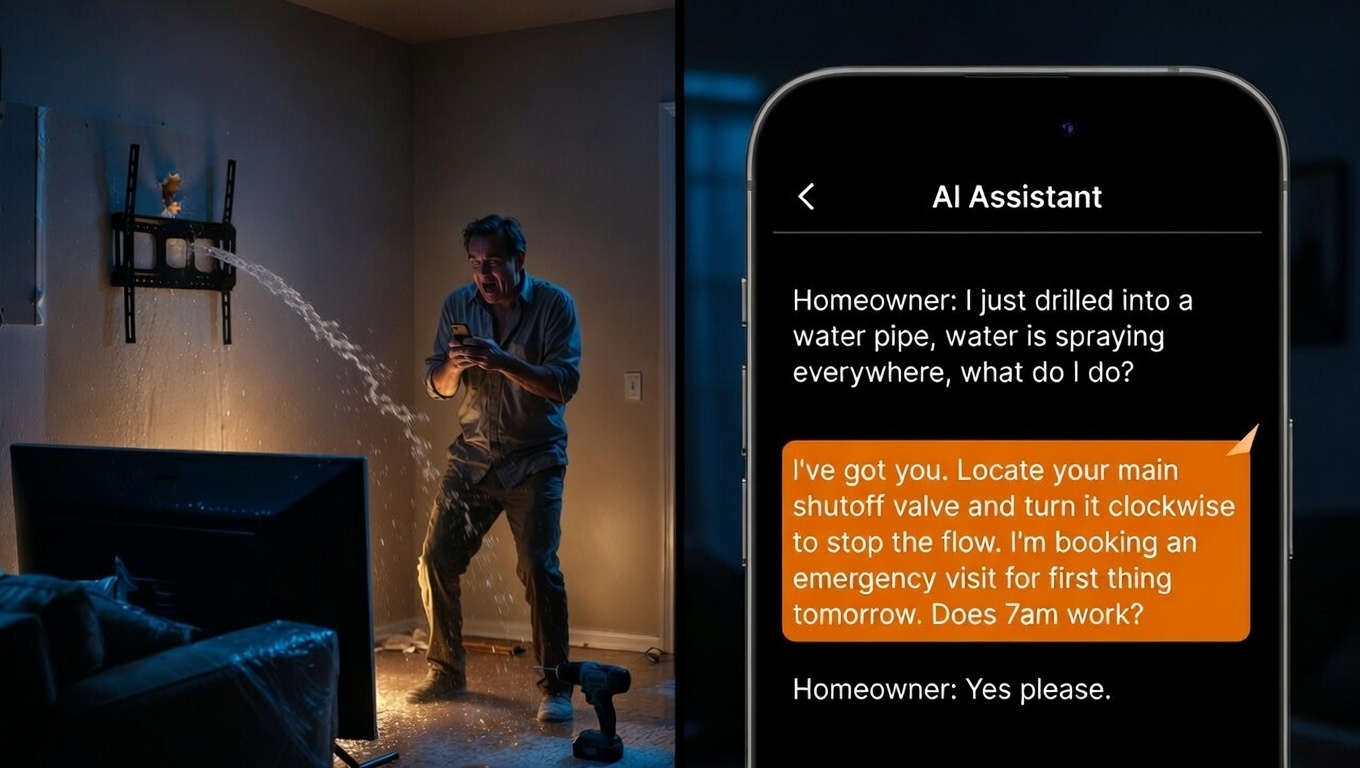
Mistake 3: Launching Everywhere at Once
Trying to go live on SMS, website chat, Facebook, and Instagram simultaneously almost always leads to broken flows and a bad first impression.
Fix: Start with one channel. For emergency-driven home services, that's almost always SMS. Get it converting, then expand. This is exactly why a phased 30/60/90-day rollout works better than a big-bang launch.
Mistake 4: Skipping Compliance and Consent for SMS
One wrong text can create serious legal exposure. A lot of businesses skip opt-in language or skip documenting consent entirely.
Fix: Use platforms with built-in compliance tools (GoHighLevel handles this well) and always include clear opt-in language at the point of capture. Document your consent records. This is non-negotiable, full stop.
Mistake 5: No Ongoing Monitoring or Prompt Refinement
Set it and forget it. The AI slowly drifts, response quality drops, and leads start falling through the cracks again.
Fix: Block 15 minutes every Monday to review the previous week's conversations. Tweak prompts, add FAQs based on what customers actually asked, and keep training on new scenarios. The best implementations get sharper every week, not stale.
The Bottom Line
These five mistakes are why most first AI rollouts in home services never produce real bookings. Avoid them and conversational AI becomes the kind of unfair advantage that lets you close work while your competitors are still checking voicemails.
If you're in HVAC, plumbing, roofing, electrical, or general contracting and want to see what this actually looks like for your business, I offer a quick 15-minute live demo. I'll scrape your website, build a custom AI agent, and simulate real SMS conversations with your leads. No pitch, no obligation, just a real look at what's possible.
Drop your biggest implementation question in the comments or DM me to grab a demo slot.
Nathan Richardson is the founder of Bot Boutique, an AI automation agency based in Frisco, TX. With 20+ years in telecom infrastructure at AT&T and IBM Cloud, he brings a level of infrastructure and systems expertise rarely found in AI automation. Bot Boutique deploys AI-powered automation across the full revenue cycle, from first contact to five-star review, for home service businesses across the DFW market and nationwide, helping them close more deals without adding headcount.


